
Liǧʷiłdax̌ʷ (Campbell River) Art Walking Tour
A self-guided tour through Campbell River highlighting Liǧʷiłdax̌ʷ totem poles, welcoming figures, reliefs, and carvings.
The Liǧʷiłdax̌ʷ people have nurtured and protected their territory for thousands of years. This tour showcases cultural landmarks, and unique tourism experiences that highlight the enduring connection between the Liǧʷiłdax̌ʷ Nations and their ancestral territories. Totem poles hold deep cultural significance; they preserve histories, lineages, and significant events. Poles include memorial, grave/mortuary, territorial, and welcoming poles. Traditionally, poles faced the water; today many face roads and modern access points.
**Totem Pole Visitation Etiquette:** do not touch or climb; be respectful with photography; keep distance during ceremonies.
Poles on Private Property (do not visit)**
Here's how to make the most of your experience:
Engage with Indigenous Experiences: Seek opportunities to explore a window into the traditions, art, and stories of the Liǧʷiłdaxʷ people. These experiences will deepen your connection to the land and its original stewards.
Respect the Land and Culture: As you explore, remember that many of the sites you will visit are part of the Liǧʷiłdaxʷ Nations ancestral territories. Approach these places with respect, mindful of their significance to the local communities.
Enhance Your Knowledge:Take the time to read the stories and background provided int his guide. Many locations featured have deep historical and cultural importance, andl earning about them will give you a richer, more meaningful experience.
Support Indigenous Businesses: By choosing to engage with Indigenous-owned businesses and services, you contribute to the ongoing vitality of the Liǧʷiłdaxʷ Nations.
We hope this guide helps you explore Campbell River through a new lens—one that highlights the enduring connection between the Liǧʷiłdaxʷ Nations and their lands, and encourages you tǒlearn from the history, stories, and wisdom that continue to thrive today.
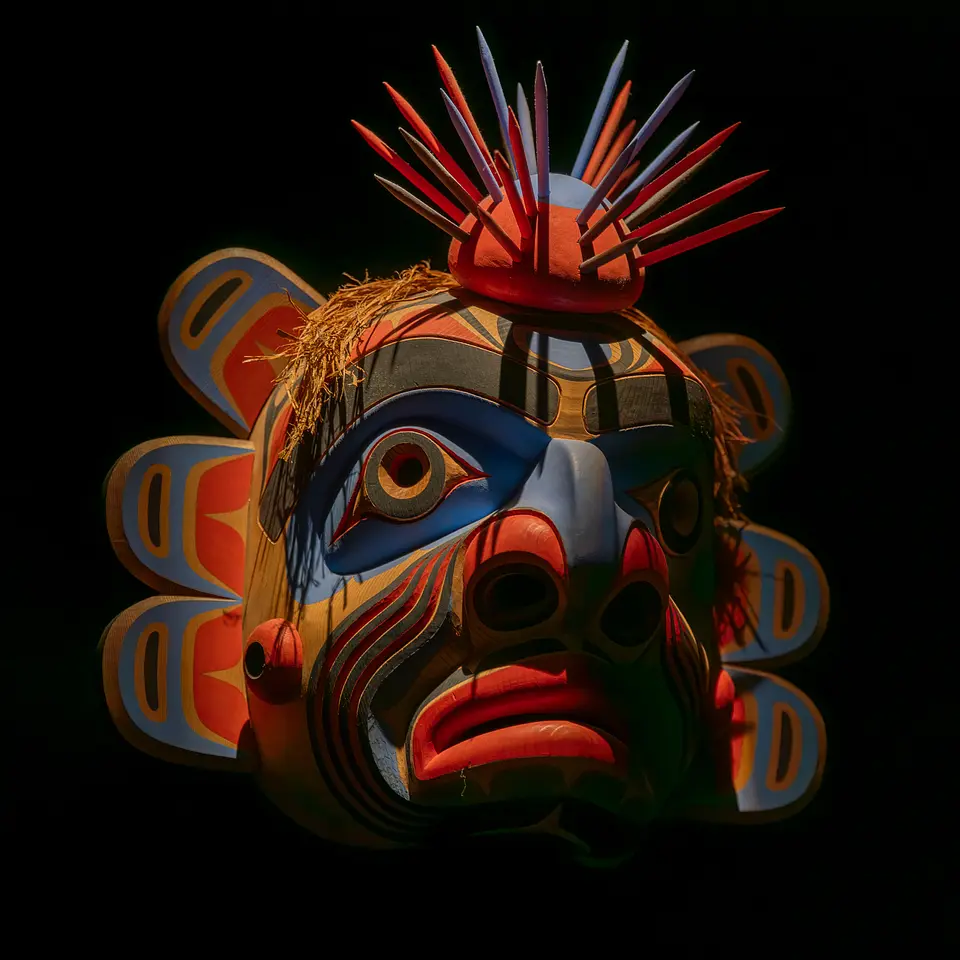
470 Island Hwy, Campbell River, BC, CA, V9W 2C1
In a small,softly lit theatre, a dramatic light and sound show brings the story of TheTreasures of Siwidi to life through a stunning display of masks. Among them is the mask of Komogwey, the “Chief of the Undersea World.”
Visitors can enjoy a five-minute presentation featuring these remarkable masks, narrated by a local Chief who powerfully shares the ancient traditions of his ancestors. Masked dance dramas are a key part of Kwakwaka’wakw potlatches, where performances re-enact legendary encounters between heroic ancestors and supernatural beings.
Potlatches are significant ceremonial gatherings in many Indigenous cultures, particularly among First Nations on the Northwest Coast. These events are hosted to mark important occasions such as births, marriages, name-giving, and funerals.
Potlatches area way to share wealth, affirm social status, and strengthen community ties. During the ceremony, hosts express generosity and leadership by giving to their guests.Traditionally, the intention was for the host to give everything, for giving all of one’s material wealth was an ultimate expression of generosity and care. Potlatches also include sharing ceremonial prerogatives, including dances, songs, and histories, reflecting deep cultural traditions and reinforcing connections tot he past, land, and family. Potlatches are a vital part of Indigenous governance and cultural expression.
The rights to these stories, and their artistic representation, are passed down through generations and remain the exclusive property of high-ranking Kwakwaka’wakw families.
Learn more about the permanent FIrst Nations exhibit through a Virtual Tour Click Here
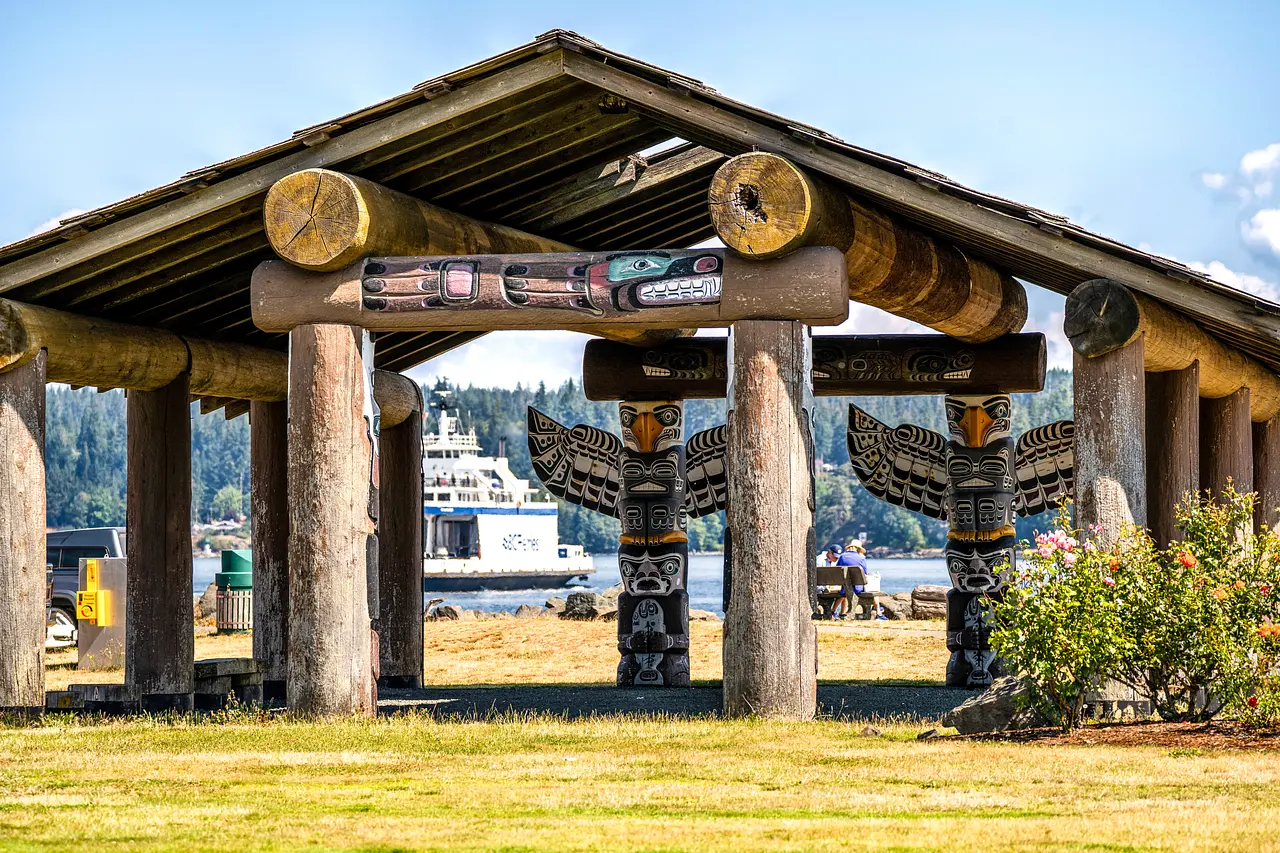
985 Discovery Cres, Campbell River, BC, CA, V9W 2C4
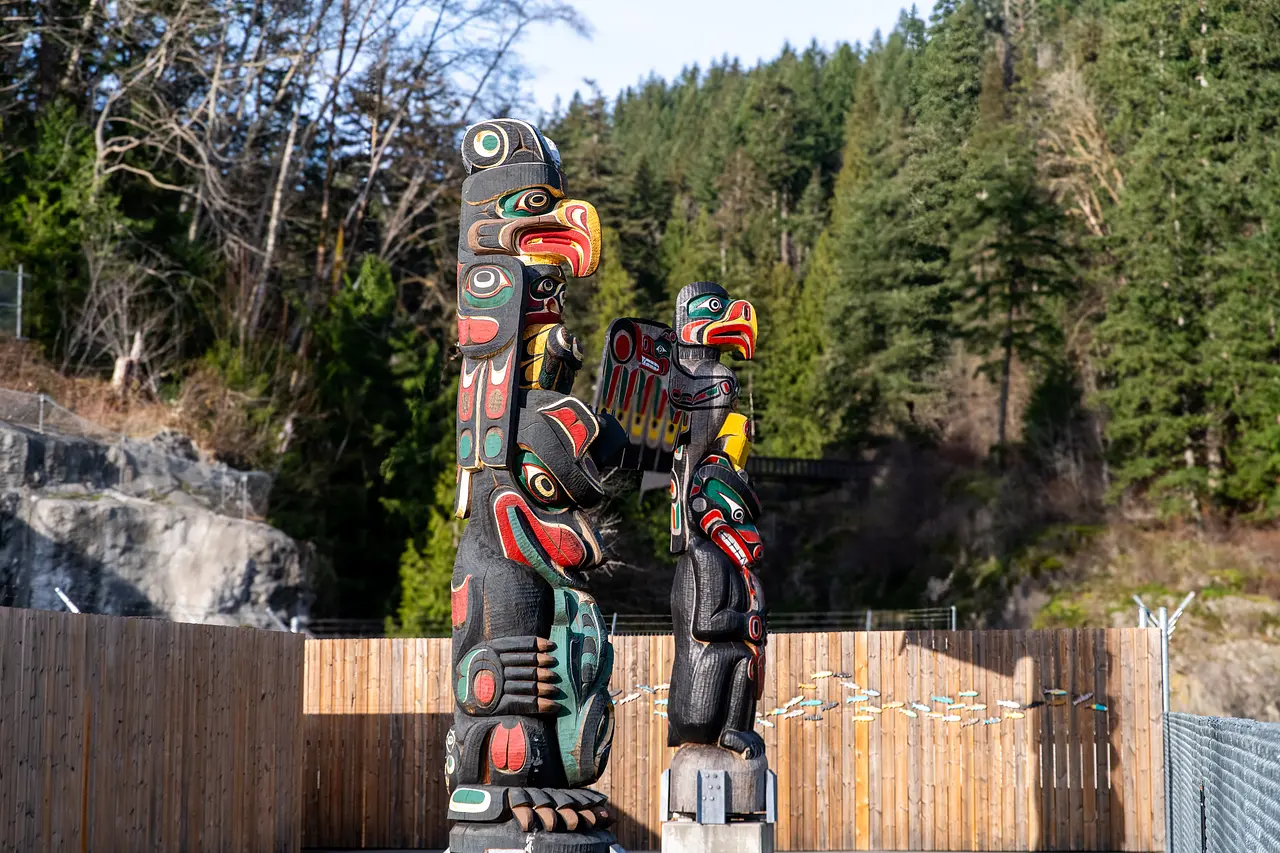
In 1972, thanks to a federal grant, the Campbell River Salmon Festival Committee embarked on a project to design and build a totem pavilion with the help of local First Nations artists. Two impressive 60-foot logs, donated from the Nimpkish Valley, part of one of the oldest timber-stands on northern Vancouver Island, were adzed (carved by hand tools) and left whole to showcase the grandeur of the region’s forests.
Master carver Sam Henderson and his family carved the two poles and crosspieces closest to the highway, while Bob Neel was responsible for the crosspiece and two totems with outstretched wings near the water. Bob designed the poles, with carving assistance from Eugene Alfred, Nick Johnson, Carl Ashley, and Dora Cook, who also took on much of the painting.
The Pavilion's design mirrors that of an open community house, traditionally used as a gathering place for conversations during long summer evenings. Dedicated at the 1973 Salmon Festival, the Pavilion was celebrated with songs and dances performed by members from Alert Bay, Campbell River, and Cape Mudge. It was then presented to the Municipality of Campbell River, with the responsibility of maintaining it for the enjoyment of both residents and visitors.
470 Island Hwy, Campbell River, BC, CA, V9W 2C1
The original 20-foot pole, carved in 1967 by the late Sam Henderson, was removed in 2001 as part of a downtown revitalization project.
After being relocated to the new Museum at Campbell River grounds, the pole endured heavy southeastern rain and snow, becoming so deteriorated that further restoration was impossible. Bill and Junior began carving a replacement pole, but the project was interrupted by the sudden passing of Bill’s brother. The late Mark Henderson, a skilled painter, had meticulously mixed the paints used on the pole, a detail that honored his involvement in this significant family project. The new pole was raised in 2017, placed in a protected spot on the Museum grounds, and blessed by the Henderson family.
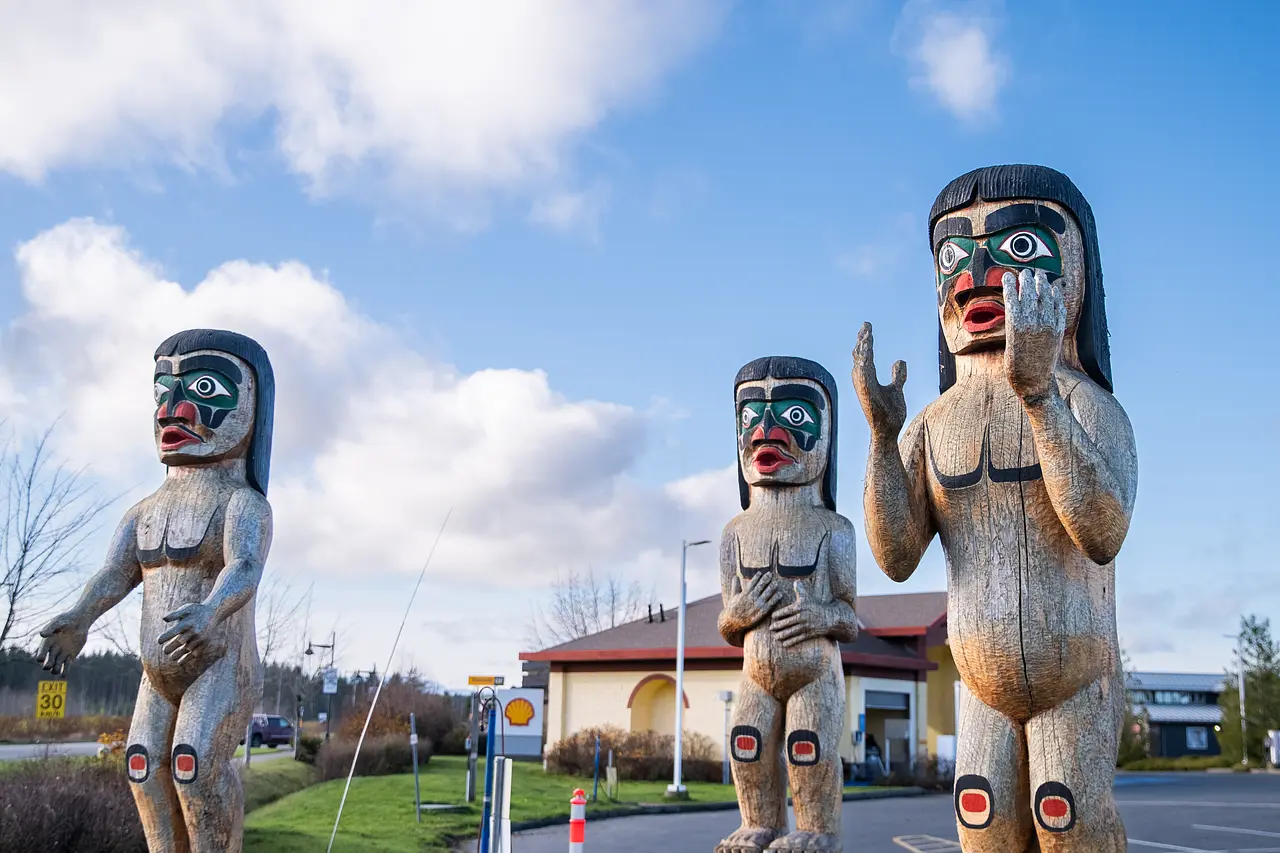
150 Brant Dr, Campbell River, BC, CA, V9H 1V8
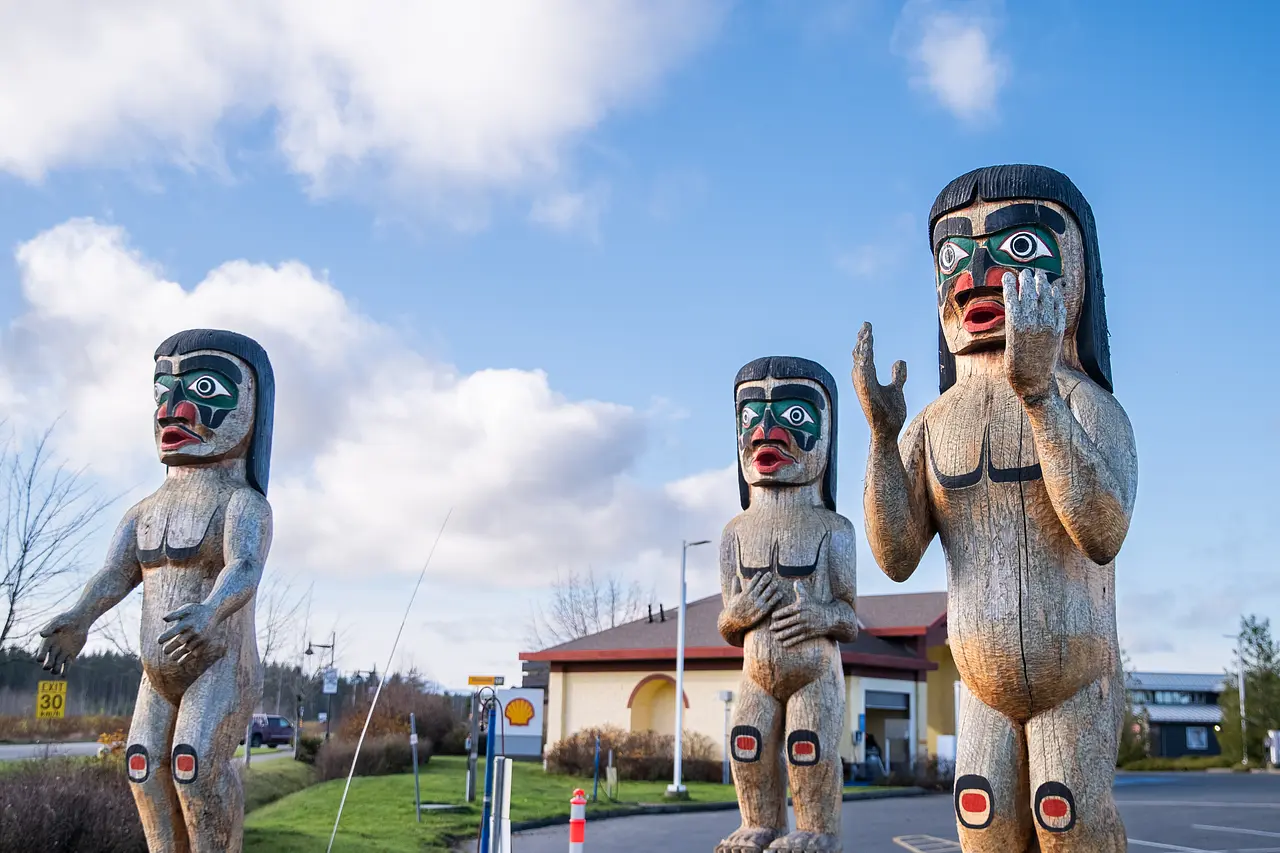
The figures were inspired by three poles that once stood in the same poses at a Liǧʷiɫdaxʷ village near Cape Mudge, Quadra Island. The positions of these three figures are meant to represent a hospitable welcome, and a willingness to share food and stories.
Max Chickite, born in 1958, is a We Wai Kai artist and a proud member of the Liǧʷiɫdaxʷ Nation from Cape Mudge on Quadra Island, BC. As the great-grandson of Chief Johnny Chickite, Max’s deep connection to his culture has shaped his artistic journey from a young age. By age eleven, he was already drawing, painting, and carving, laying the foundation for a flourishing career. In 1997, Max’s exceptional carving skills drew the attention ofThe Walt Disney Company, who later hired him as a sculptor for the film“Eaters of the Dead.”That same year, he was nominated for"Citizen of the Year" in Campbell River.
Max is passionate about sharing his knowledge of First Nations art, often volunteering at local schools to teach and inspire young artists. Today, Max divides his time between carving, spending time with his grandchildren, and continuing to pursue his art, all while sharing his rich cultural history with the world.
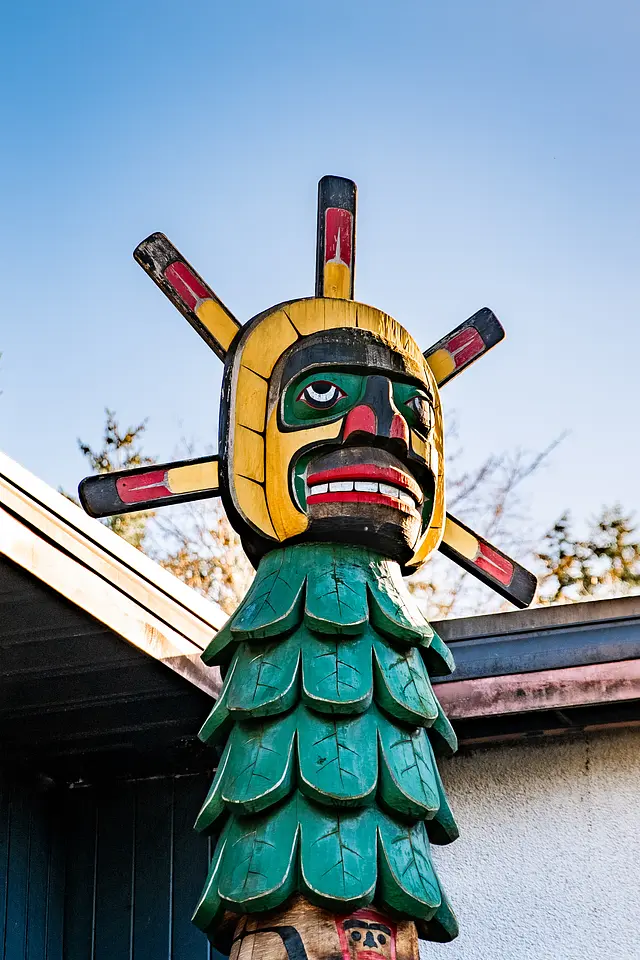
441 4 Ave, Campbell River, BC, CA, V9W 3W7
The Laichwiltach Family Life Society is dedicated to supporting families and promoting their well-being. This totem, located outside the Laichwiltach Family Life Society office, symbolizes the powerful connections between mothers, Mother Earth, and the tree of life (cedar). It represents the passing of strength and wisdom through the generations, both now and into the future, symbolized by the sun.
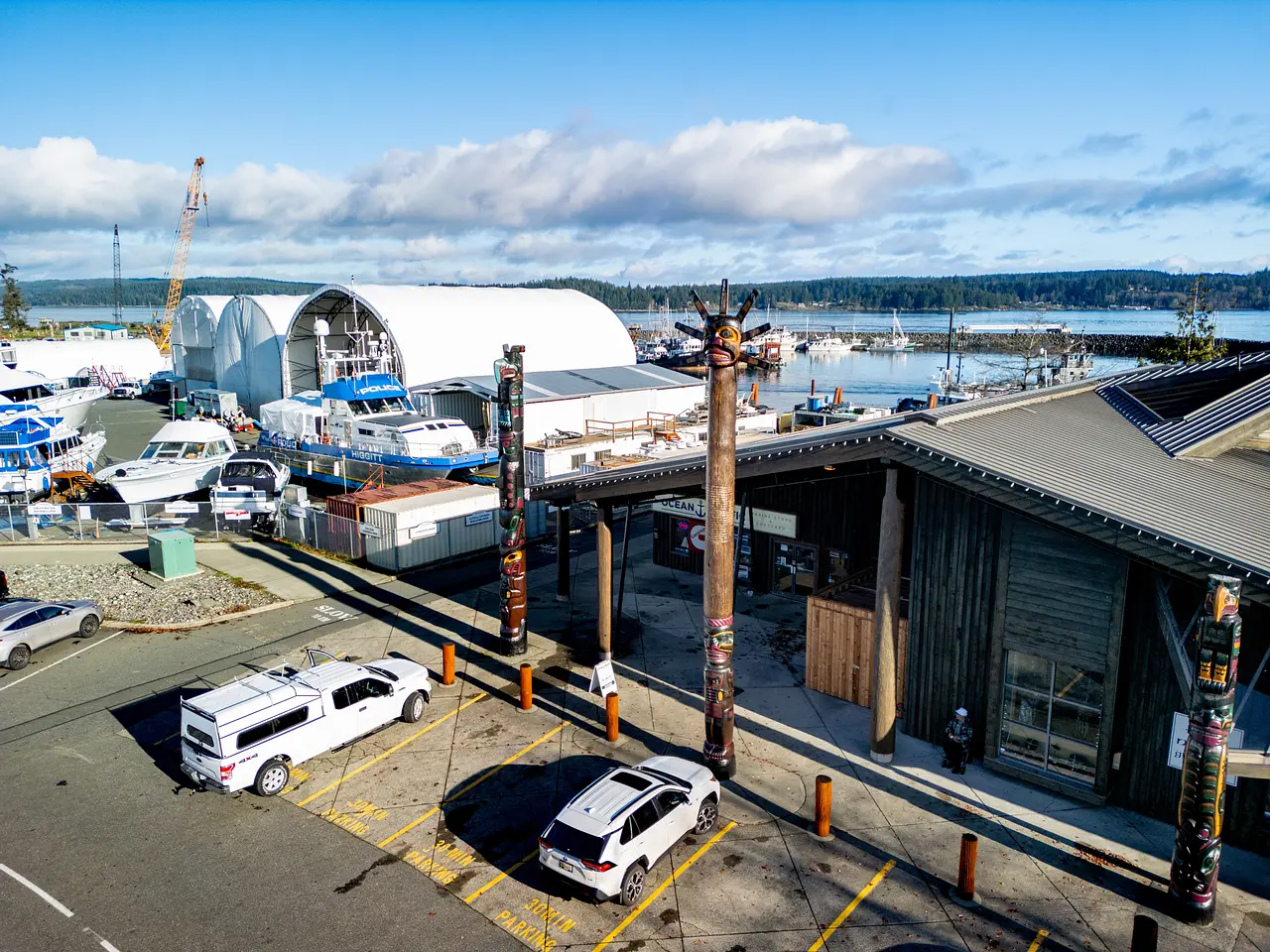
1370 Island Hwy, Campbell River, BC, CA, V9W 8C9
One pole depicts a kolus, young thunderbird, a whale, and a grizzly bear. The kolus is known for its thick coat of white down, as it is too young to have feathers. Another pole features the sun atop a tall pole, with a chief holding a copper, symbolizing wealth and power. The third pole shows an eagle and a sisiutl, a sea serpent. Unlike many other poles around town, these are not mounted on steel or cement bases; instead, they are sunk eight feet into the ground, making them a permanent part of the plaza.
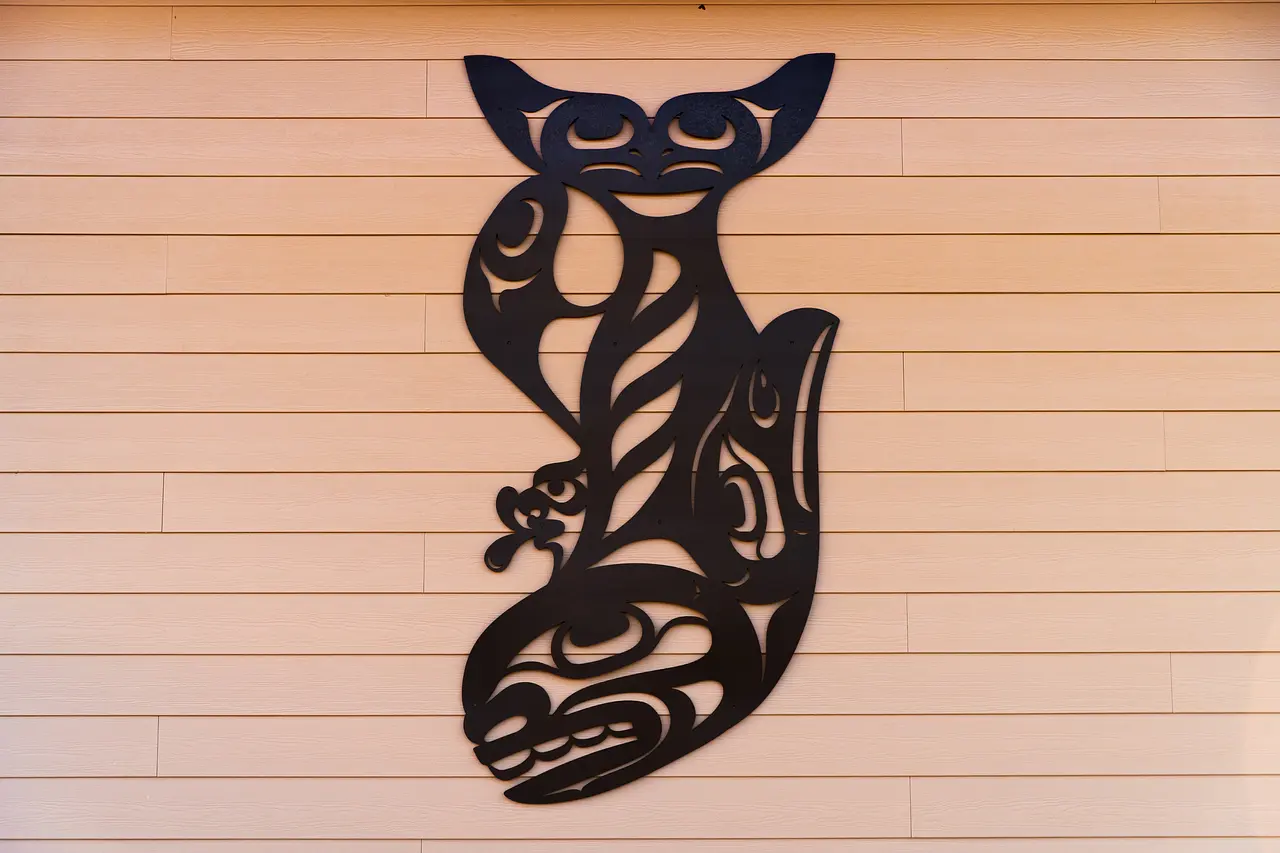
145 Brant Dr, Campbell River, BC, CA, V9H 1V8
Brent’s intricate designs vividly reflect the traditions, stories, and natural landscapes of the region. Now a permanent feature at Quinsam Crossing, his artwork enhances the area’s beauty while fostering a deep sense of cultural pride within the community.
Recently, Brent’s custom privacy screens were unveiled at Canada’s first Indigenous-owned Starbucks, located on the We Wai Kai reserve. These unique screens transform an ordinary drive-through into an extraordinary art gallery, offering customers the opportunity to experience stunning Indigenous artwork while they wait, turning a routine coffee stop into a rich cultural journey.
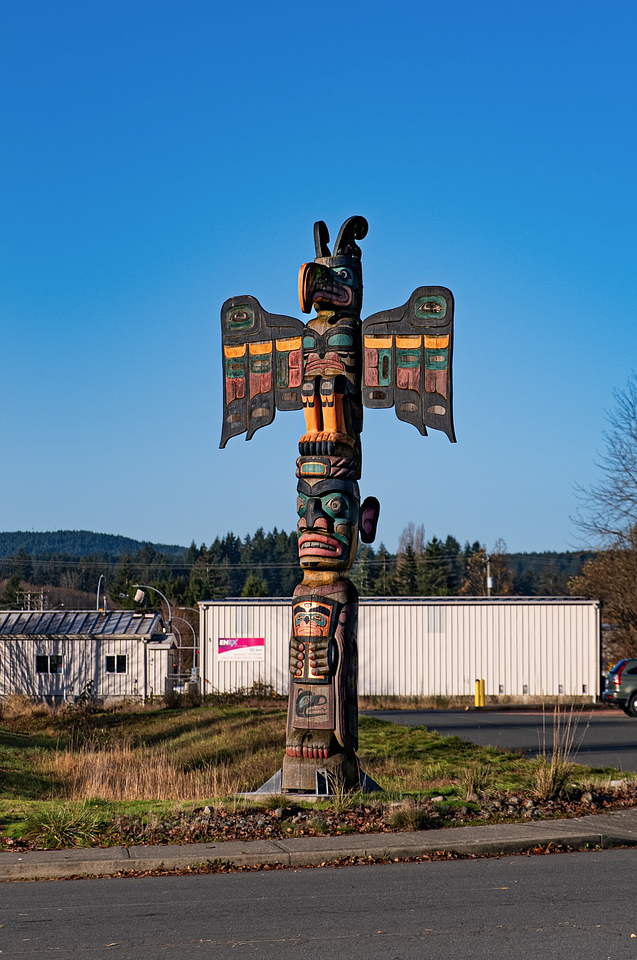
1477 Island Hwy, Campbell River, BC, CA, V9W 8E5
Carved to stand as a reminder that the plaza remains Wei Wai Kum land. T'łisala, the Likʷala word for "sun," is a figure from the sky who became the first ancestor of several Kwakwaka’wakw clans.
One story tells ofT ́łisala wearing abalone-shell earrings, and as he walks across the sky, the sunlight reflects off the shells, creating daylight for the world.
Adjacent is a pole featuring the Thunderbird atop the Wild Woman of the Woods, a powerful figure known by many names, including Tsonoqua, Dzunuk’wa, Th’owxiya, and the Wealth Giver. In Liǧʷiɫdaxʷ culture, she is a mysterious giantess, often depicted with pursed lips as she lets outher eerie cry, "Huuu! Huuu!" This call echoes through the forest, warning children who wander too far from safety. While she is feared for her role in keeping children close to home, she is also honored as a bringer of wisdom, good fortune, and the ability to shape-shift. She carries a basin of water with the power to transform the ugly into the beautiful and even revive the dead.
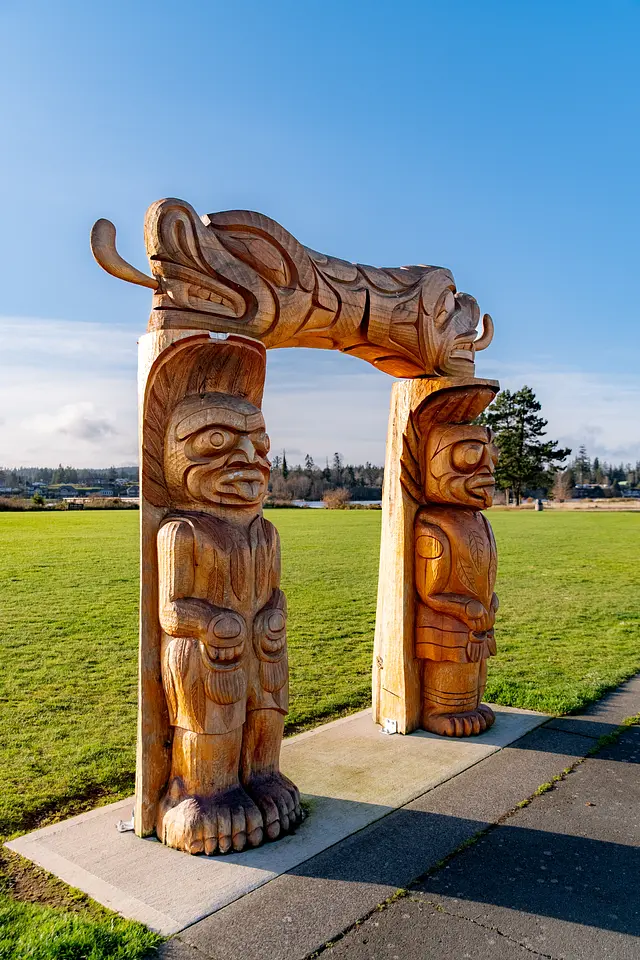
3200 Spit Rd, Campbell River, BC, CA, V9W 4R9
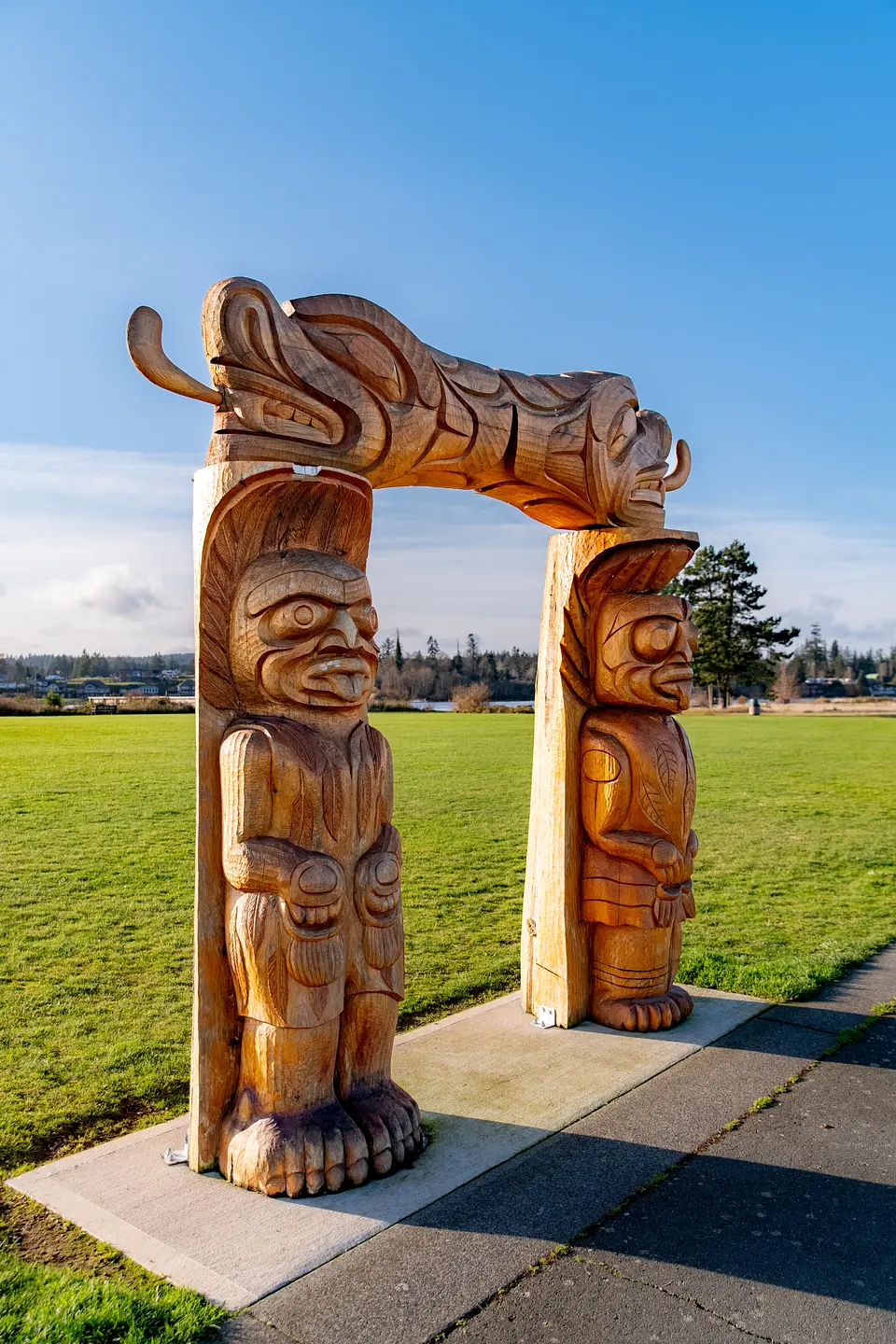
The carvings on this arch depict two Xwi Xwi dancers as the pillars, with the Liǧʷiłdax̌ʷ sea worm held above them. In the Lik̓ʷala language, "Liǧʷiłdax̌ʷ" refers to a large sea worm that cannot easily be killed—when cut apart, its pieces survive and swim away.
This remarkable arch was completed in just three days, a testament to the extraordinary skill of the carvers. Junior Henderson carved the sea worm crossbeam, while Ernie and Karver each carved one of the Xwi Xwi dancers.
There are many stories about how the Xwi Xwi dance became part of Liǧʷiɫdax̌ʷ culture. In one tale, the Xwi Xwi was included as part of a dowry in a marriage. The mask often features animals, typically birds, protruding from its head, and the dancer carries rattles made from scallop shells strung on a hoop, representing the shaking of the earth.
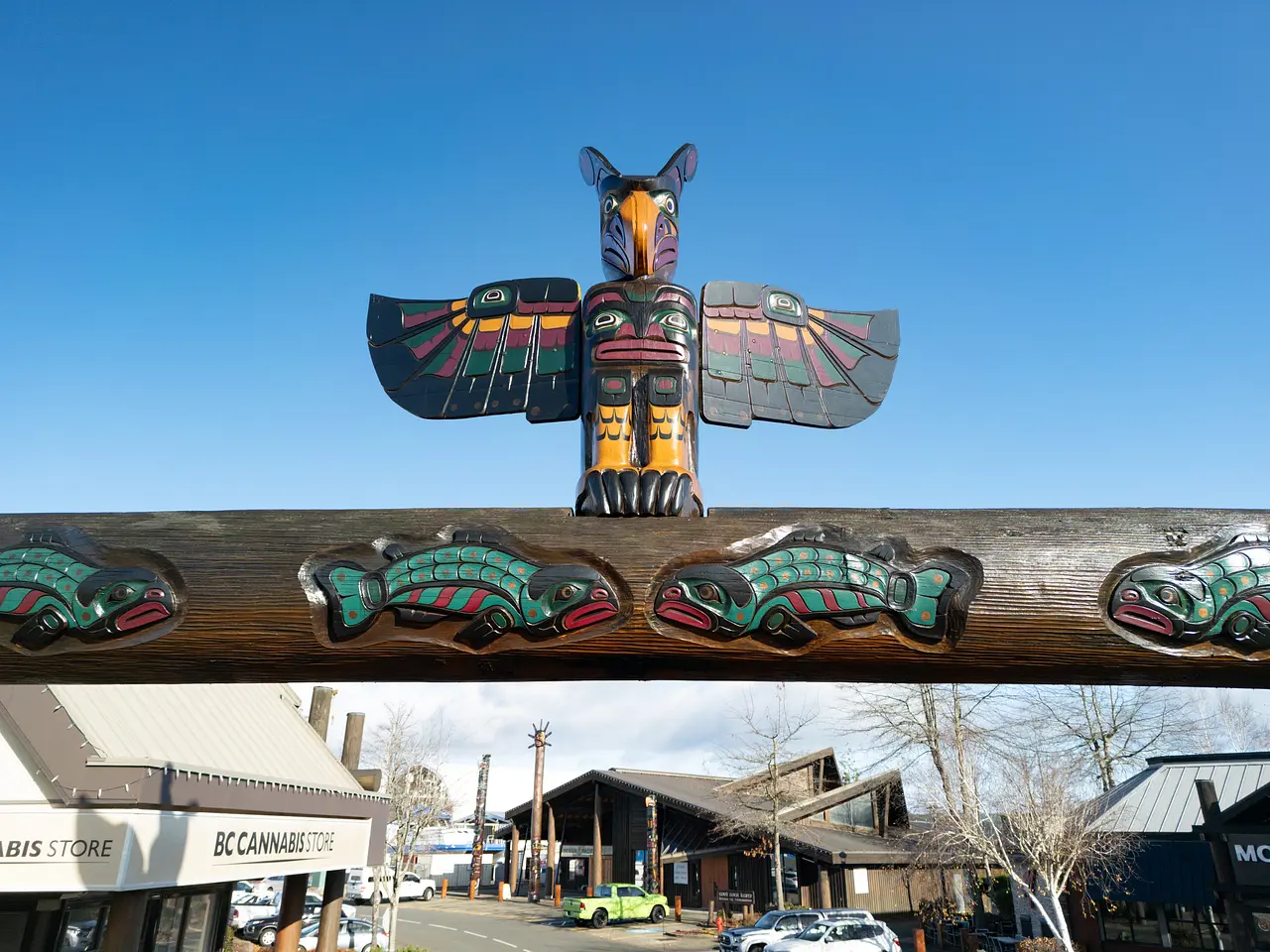
1360 Island Hwy, Campbell River, BC, CA, V9W 8C9
"Thunderbird is kind of like the mascot of the plaza," says carver Bill Henderson about his 1998 work.
The Thunderbird, large enough to carry a whale in its talons, is often depicted this way. Known as a protector of the people, Thunderbird helps by lifting great house beams with its talons. The Thunderbird and salmon carvings celebrate the enduring connection between the Liǧʷiłdax̌ʷ people, the land, and the sea.
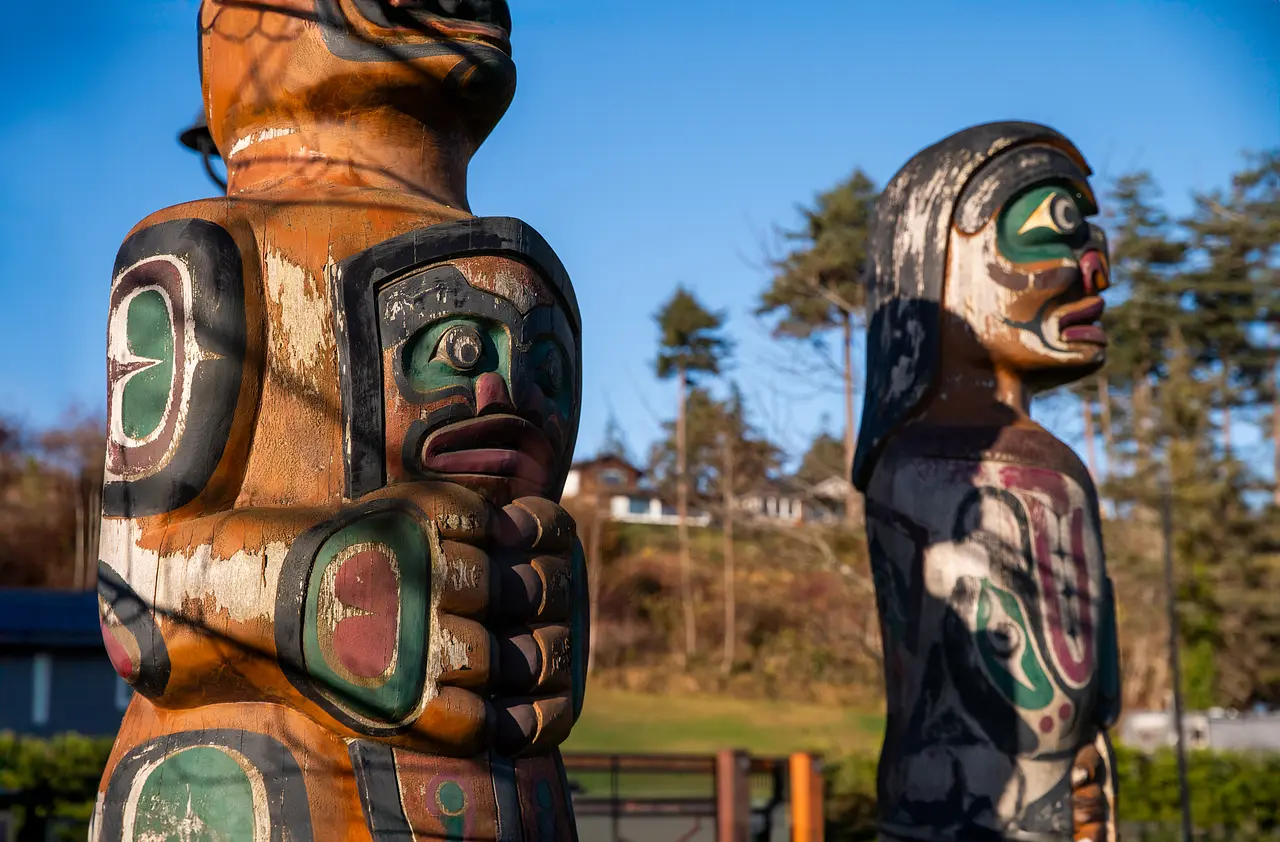
1416 Island Hwy, Campbell River, BC, CA, V9W 7K6
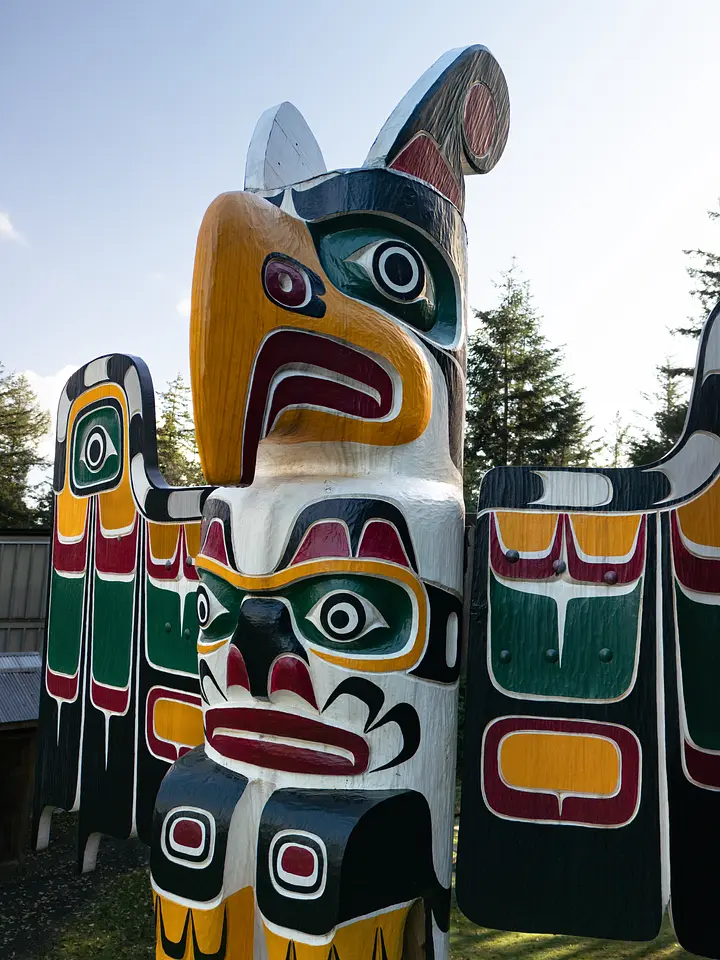
Carved around 1998 and refurbished in 2013 by Bill’s nephews, Junior and the late Mark Henderson, these welcoming figures are depicted with outstretched arms, a traditional gesture of hospitality and invitation to the territory.
The Thunderbird, a symbol of power, is one of the main crests of the Wei Wai Kum Nation. Known for creating storms, Thunderbird is believed to live high in the mountains and hunt killer whales using lightning snakes hidden beneath his wings. Often shown with wings spread at the top of a pole, Thunderbird resembles an eagle but can be distinguished by the curly horns on its head, symbolizing its supernatural powers.
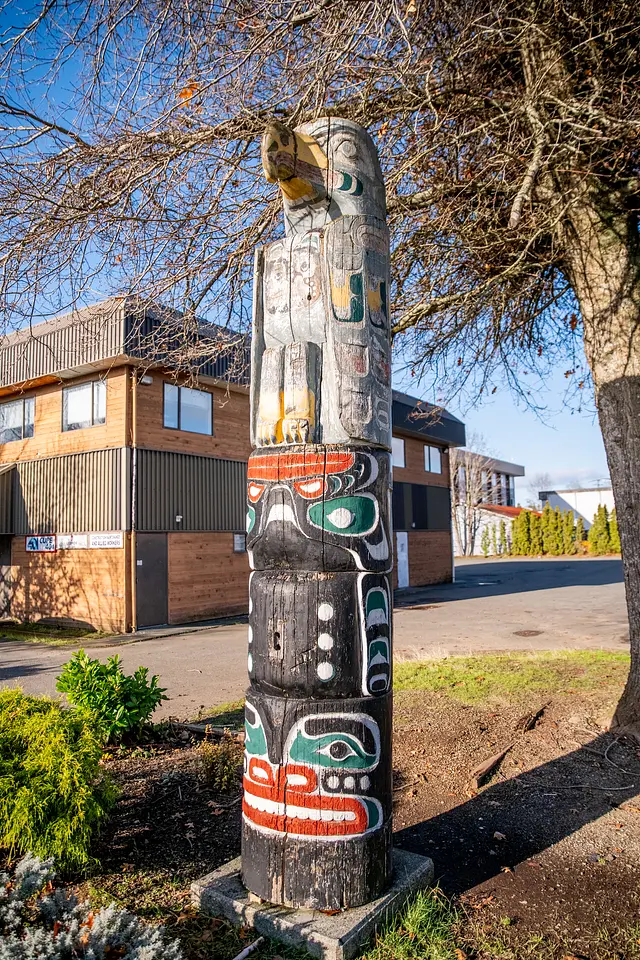
830 14 Ave, Campbell River, BC, CA, V9W 4H4
This totem pole features a killer whale, a symbol of protection and a guardian of safe journeys. Known for traveling in close-knit family groups, the killer whale represents community and support.
While not carved by a Liǧʷiłdax̌ʷ artist, it was carved by Speck as a project to teach carving techniques to members of the fishermen's union during a strike, and it was praised by local First Nations, city officials, and labor leaders. Once painted in bold, vibrant colors, the pole has become weathered over time, with the trees overhead adding to its worn appearance. The orca’s fin has been missing for several years.
1003 Discovery Cres, Campbell River, BC, CA, V9W 2C4
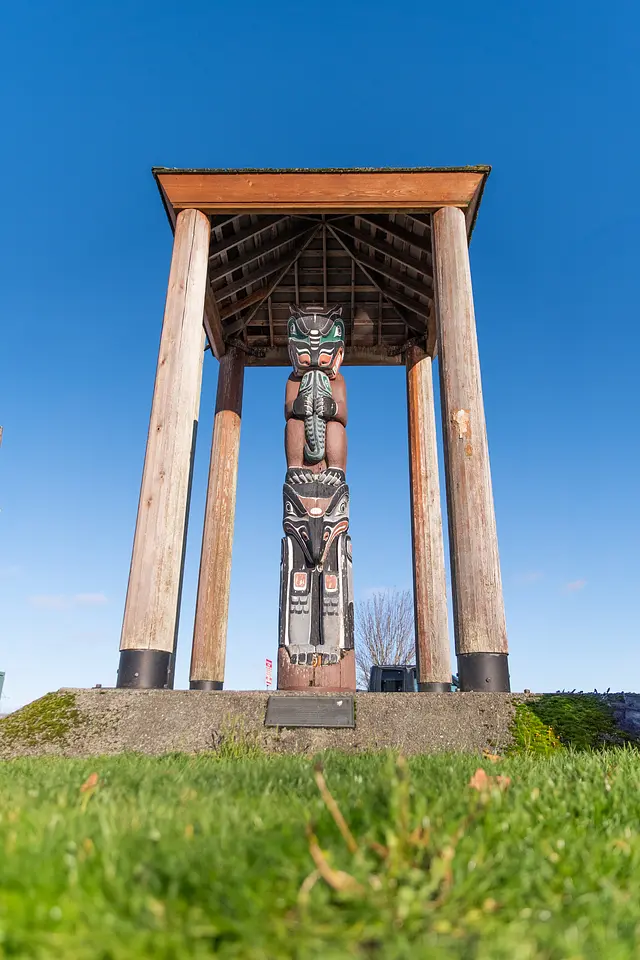
The late master carver Sam Henderson created this pole in 1966 as part of the 'Route of the Totems' initiative, commissioned by the Department of Highways to celebrate the centenary of the 1866 union of the colonies of Vancouver Island and mainland British Columbia.
Originally placed at the Tsawwassen Ferry terminal, the pole was returned in 2005. Bill Henderson, Sam’s son, recalls helping to paint the pole at the age of 16 and later, as a master carver himself, restored it in 1995. Bill has restored several of his late father’s works over the years.
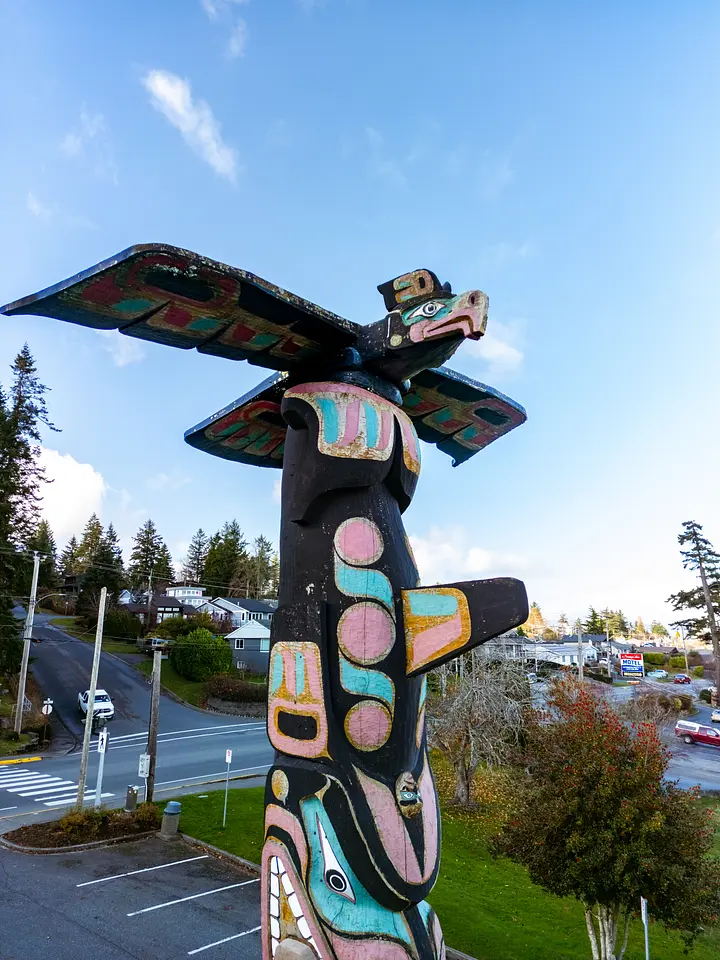
491 Island Hwy, Campbell River, BC, CA, V9W 3V9
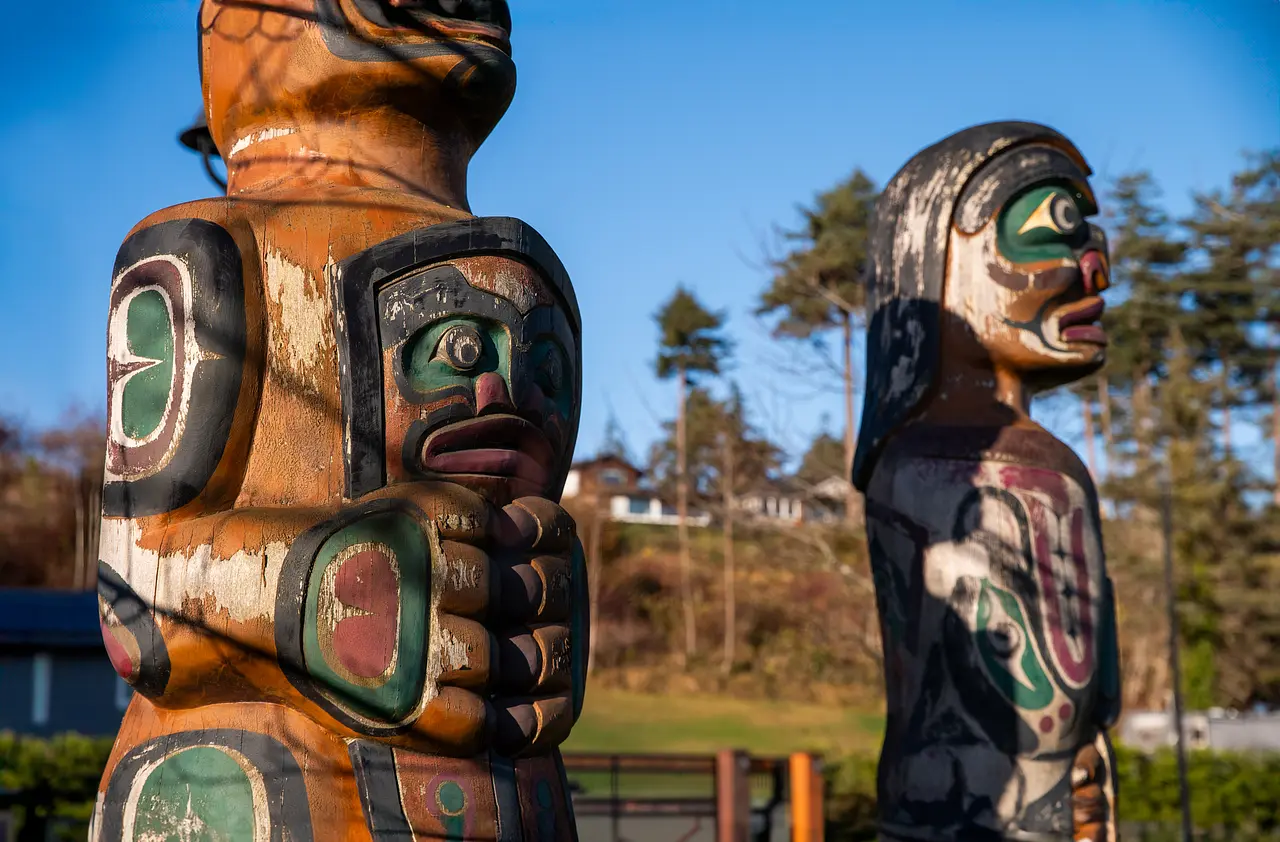
Adorned with a beautiful abalone-inlaid cedar headband and holding a "Copper," a powerful symbol in Liǧʷiłdax̌ʷ culture, this striking totem stands taller than the Torii Gate in the same park.
The gate was a gift from Campbell River's sister city, Ishikari, Japan. A totem, also carved by Bill Henderson, was gifted to Ishikari, further strengthening the bond between the two cities.
1500 S Island Hwy, Campbell River, BC, CA, V9W 1B7
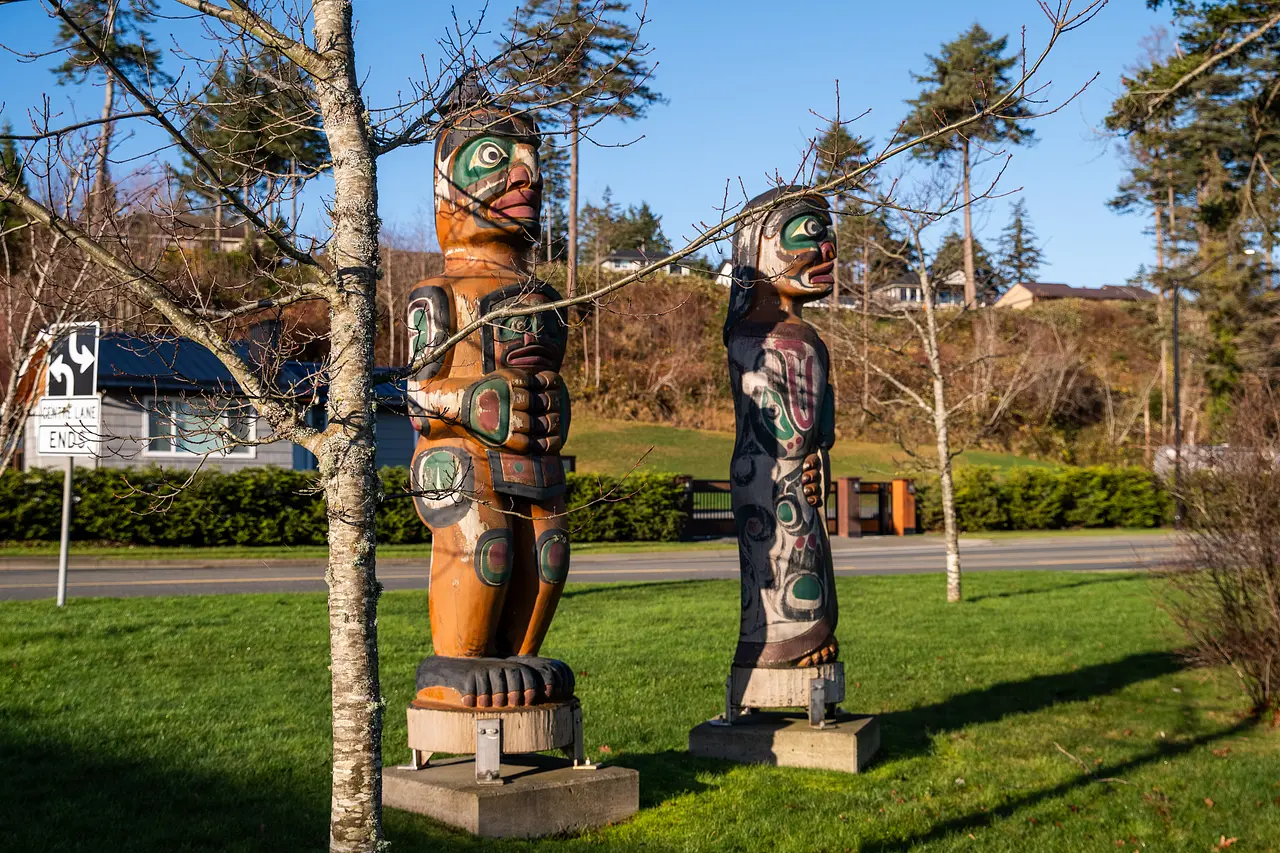
This pair of human figures serves as a reminder of the people who once lived by this creek. The female figure is wrapped in a beautiful blanket adorned with a sisiutl (sea serpent) design, while the male figure holds a copper, a ceremonial symbol of wealth and high status.
Each copper carries its own unique name, history, and value. In certain circumstances, coppers were broken for various reasons, and their value increased with each transfer of ownership. The purchase, sale, and even destruction of coppers are traditions that continue today in the big house ceremonies.
2200 Brewster Lake Rd, Campbell River, BC, CA, V9H 1P1
The We Wai Kai Nation pole, carved by Max Chickite with assistance from Jessica Chickite and Cody LaFrance, features important cultural symbols, including an eagle, bear, salmon, and sisiutl (sea serpent).
The Wei Wai Kum Nation pole, created by Thomas D. Hunt with his apprentice Ray Shaw, includes a thunderbird, bear, salmon, and a figure known as the human bubble man, all significant to the Nation’s history.
In 2016, Ron Neufeld, the City of Campbell River’s general manager of operations, remarked that the poles provide “a real opportunity to tell the story of our watershed, share the history of the Snowden Forest, and reflect on how BC Hydro has utilized the watershed, while also celebrating our First Nations culture.”- Wei Wai Kum Chief Councillor Chris Roberts reminds folks how the Nations “were never consulted on the original hydroelectric facilities or on its impact to our territory. The work done since 2007 has certainly helped, though deep emotions remain… we really appreciate BC Hydro’s idea to have these poles placed here, overlooking the river, to help to continue to move our relationship forward.”
1482 Island Hwy, Campbell River, BC, CA, V9W 8C9
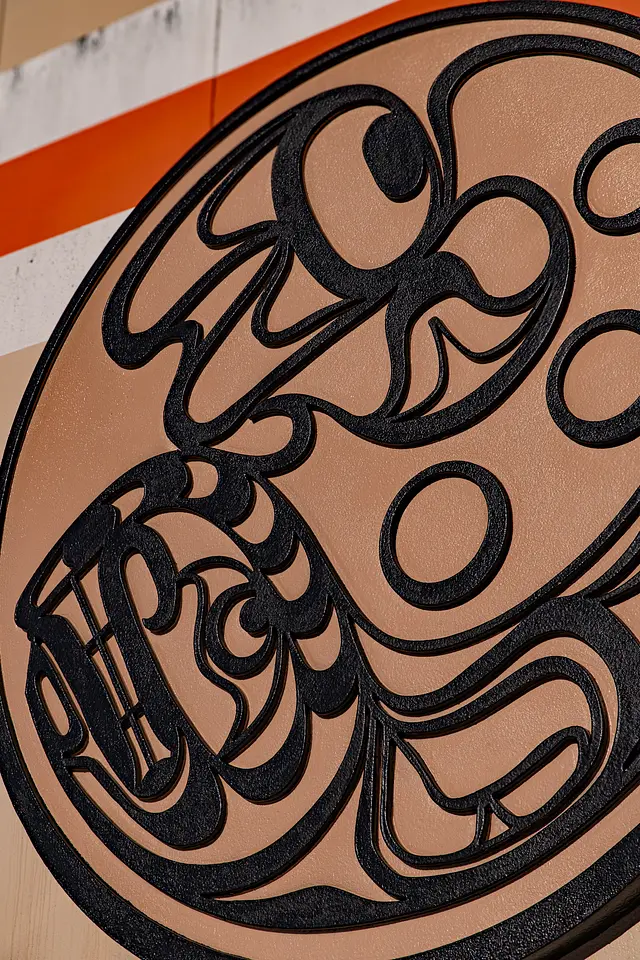
There are three reliefs on the front of the Home Depot as a reminder that the plaza remains Wei Wai Kum land. The designs, including Thunderbird and salmon reliefs by Mulidzas-Curtis Wilson and a whale relief by Tom Hunt, celebrate the Nation's culture and warmly welcome visitors to appreciate and respect the history of the area.
1416 Island Hwy, Campbell River, BC, CA, V9W 7K6
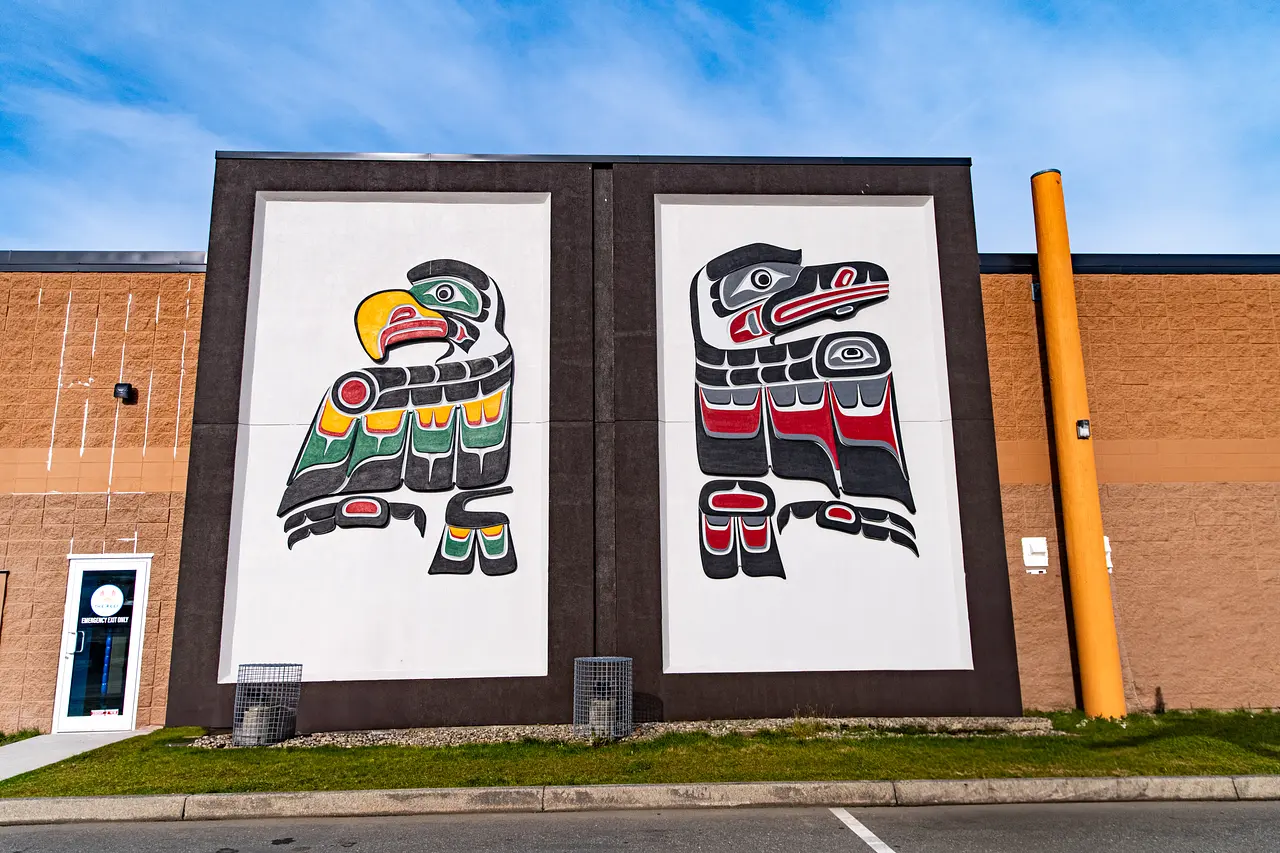
Displayed on several walls around the shopping center, the two reliefs pictured above feature Thunderbird and its younger sibling, Kolus, “Young Thunderbird.” Kolus is easily recognized by its blue beak and the eagle feather on its head, while Thunderbird is distinguished by its yellow beak and curling horns. These reliefs were beautifully repainted in 2023 by nephews of the original artist, Junior and Greg Henderson.
1630 Old Spit Rd, Campbell River, BC, CA, V9W 3E8
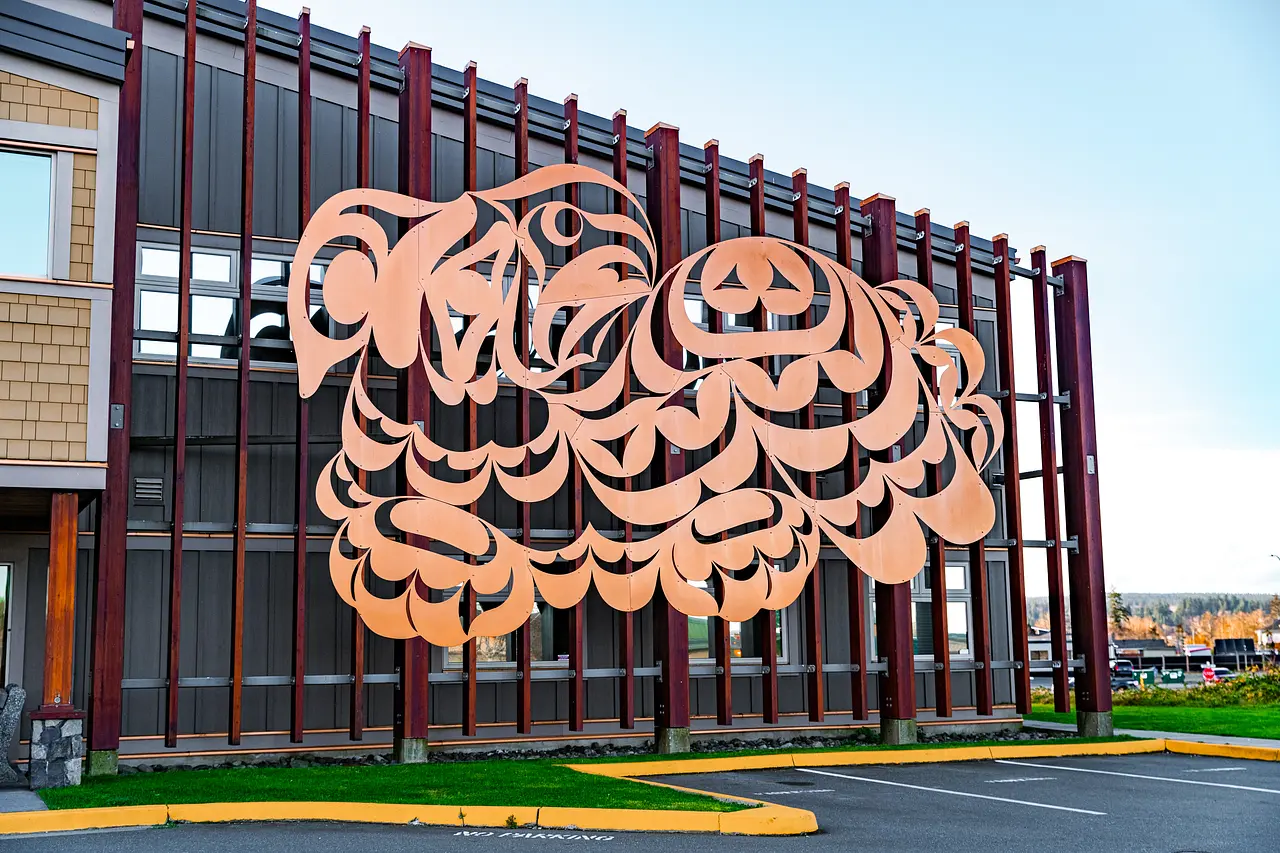
Cast in copper, these reliefs honor the deep cultural significance of copper to the Liǧʷiɫdax̌ʷ people. As one of the final projects completed by the late Mark Henderson, these works carry special meaning. Thunderbird is depicted on the left, and Eagle on the right, both symbols of power and protection.
The building also houses the Council Chambers and a small meeting room, reflecting the continued importance of leadership and community gatherings in Liǧʷiɫdax̌ʷ culture.
401 11 Ave, Campbell River, BC, CA, V9W 4G2
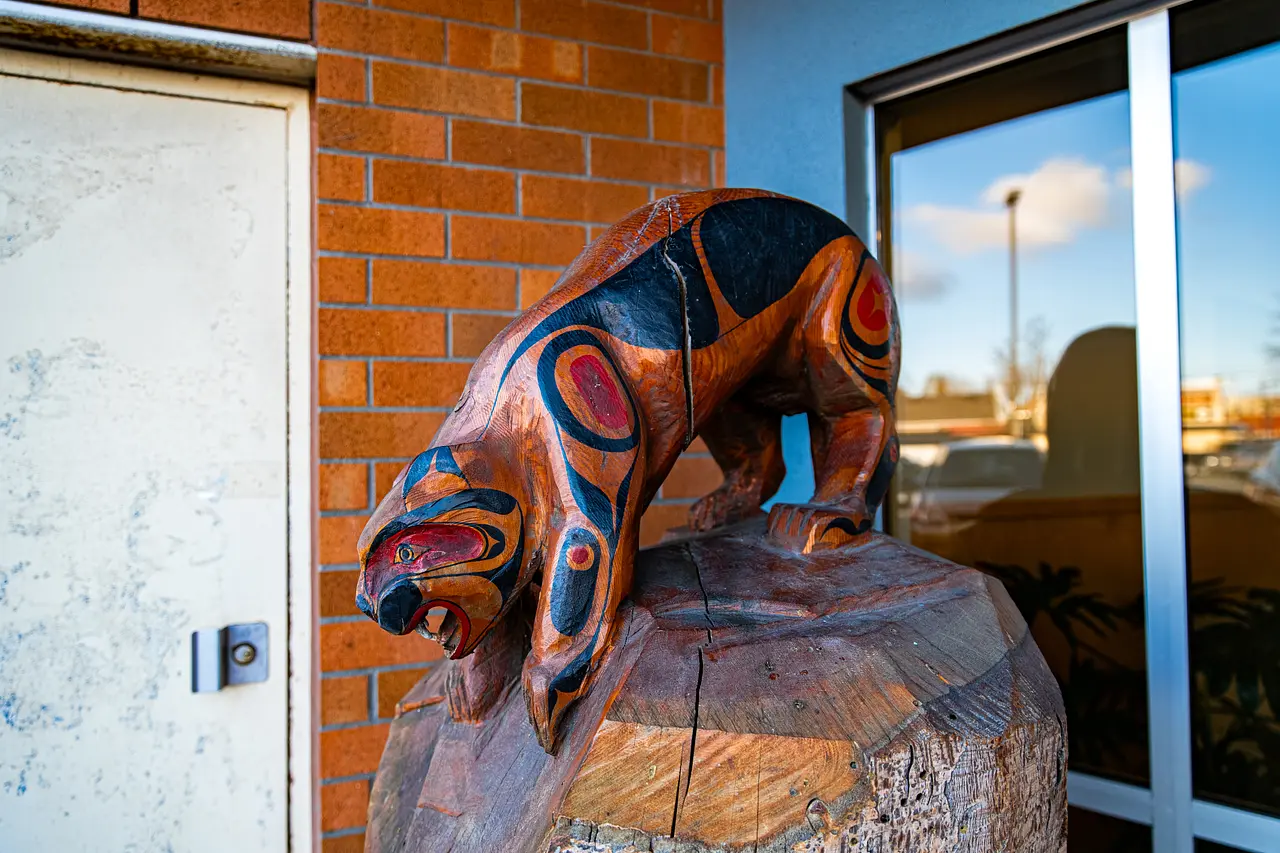
The cougar, known as bədi in the Lik̓ʷala language, is also referred to as the mountain lion, panther, or puma. As one of the most widespread large mammals in the world, the cougar is often called the "ghost cat" because it is rarely seen or heard by humans. Its ability to blend seamlessly into its surroundings and remain nearly scentless makes it elusive. For this reason, cougars are seldom depicted in Liǧʷiɫdax̌ʷ masks or carvings. Typically solitary, these animals have territories that can stretch over 200 square kilometers.
Explore More Trails
Who we are
We are traditional hən̓q̓əmin̓əm̓-speaking people. Today, we are a strong, growing community of over 1,300 members. Many of our members live on a small portion of our traditional territory, known as the Musqueam Indian Reserve, located south of Marine Drive near the mouth of the Fraser River. We have always moved throughout our territory using the resources it provides for fishing, hunting, trapping and gathering.